Pilates vs. Weight Training: What’s the Difference?
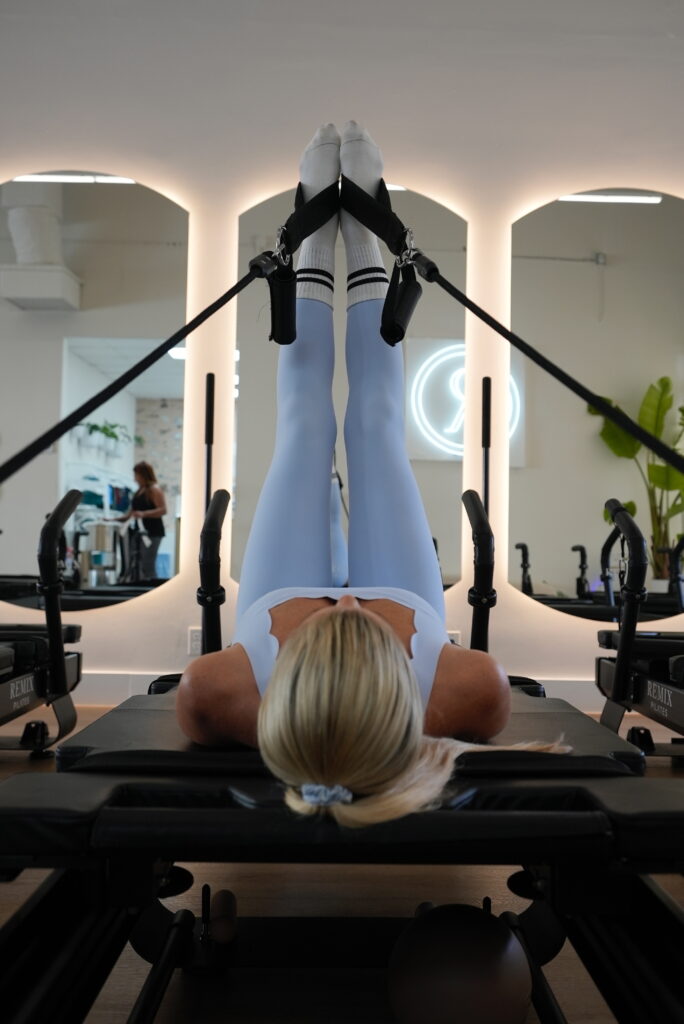
If your weekly workout routine includes both the Pilates studio and the weight room, you may be getting more out of each than you realize.
Pilates and traditional strength training are often treated as competing workouts, but they don’t have to be. Both can help you build strength in different ways, and combining the two can create a more well-rounded fitness routine.
At Remix Modern Pilates in Boca Raton, we’re big believers in movement that supports everything else you love to do. That includes what happens outside the studio.
Pilates vs. Weight Training: What’s the Difference?
Traditional weight training typically focuses on building strength by progressively challenging your muscles with external resistance, using dumbbells, barbells, machines, or other equipment.
Pilates also uses resistance, but places a strong emphasis on controlled movement, stability, alignment, core strength, and body awareness.
At Remix, our 50-minute XFormer Pilates classes use resistance and slow, intentional movements to challenge the entire body. If you’re used to lifting weights at the gym, you’ll probably recognize the muscle fatigue. You’ll just get there a little differently.
Neither approach needs to replace the other.
How Pilates Can Complement Strength Training
Adding Pilates to a strength-training routine gives you an opportunity to work on some of the smaller details behind bigger movements.
Core strength and stability
Your core is involved in nearly every major lift. Pilates places significant emphasis on core control and stability, helping you become more aware of how you brace and support your body during movement.
Mobility and range of motion
Strength and mobility work best together. Pilates incorporates controlled movement through different ranges of motion, making it a great complement to a traditional gym routine.
Balance and control
Lifting isn’t only about how much weight you can move. How you move it matters, too. Pilates challenges balance, coordination, stability, and control, all of which can support better movement patterns in and out of the gym.
Muscular endurance
That familiar Pilates shake has a purpose. Longer periods under tension and controlled repetitions challenge muscular endurance differently than many traditional strength workouts.
Can Pilates Make You Stronger?
Absolutely. Pilates is resistance training, and a challenging Pilates class can work muscles throughout your entire body.
But “strong” doesn’t have to mean just one thing.
There’s maximal strength, muscular endurance, stability, control, coordination, and the ability to move well through different ranges of motion. A well-rounded fitness routine can train several of these qualities rather than focusing exclusively on one.
That’s why Pilates and lifting can work so well together.
How Often Should You Do Pilates If You Also Lift Weights?
There isn’t one perfect schedule for everyone. Your ideal routine depends on your goals, experience level, recovery, and the other activities you enjoy.
For some people, that might mean lifting three days a week and taking Pilates twice. For others, Pilates may be their primary workout with one or two traditional strength sessions mixed in.
The goal is to create a routine you can recover from and, most importantly, maintain consistently.
Build a More Well-Rounded Workout Routine in Boca Raton
You don’t have to be a “Pilates person” or a “gym person.”
You can lift heavy. You can work on mobility. You can build core strength. You can improve your balance and control. And yes, you can shake on the XFormer, too.
If you’re looking for a Pilates studio in Boca Raton to complement your current strength-training routine, Remix Modern Pilates offers 50-minute XFormer classes designed to challenge strength, endurance, stability, and control.
New to Remix? Try our Two-Week Unlimited Intro Offer for $79 and discover how Pilates can fit into your existing fitness routine.