

Pilates vs Weight Training: What’s the Difference and Why It Matters
Strength means different things to different bodies.
For some, it looks like lifting heavier.
For others, it feels like moving with more control.
Pilates and weight training are often framed as opposing approaches. In reality, they are two distinct training systems that develop strength through very different mechanisms. Understanding how each one works allows you to train with more clarity and purpose.
Weight Training: Building Capacity Through Load
Weight training is centered around external resistance.
You squat, hinge, press, and pull against measurable load. Over time, that load increases. The body adapts by increasing muscle fiber size and improving bone density. This process, progressive overload, is what drives noticeable strength gains.
The primary adaptations include:
-
Increased muscle mass
-
Higher force production
-
Improved bone density
-
Enhanced metabolic demand
Weight training develops the body’s ability to produce force. It is direct, measurable, and effective.
However, load alone does not address how efficiently the body stabilizes, aligns, and coordinates under that force.
Pilates: Building Precision and Control
Pilates develops strength through control rather than maximal load.
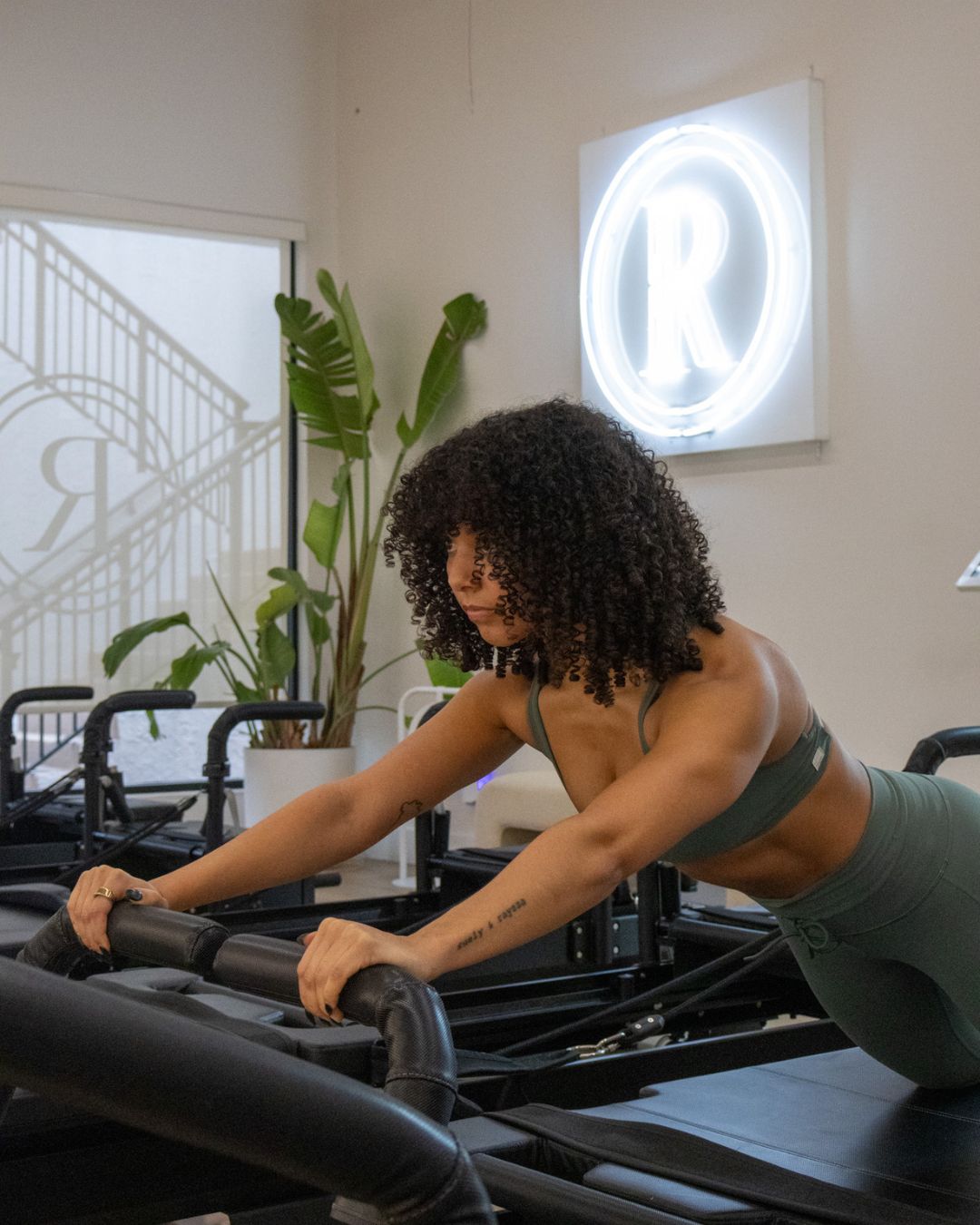
On the XFormer, resistance is spring-based and dynamic. Muscles are placed under sustained tension while the body is required to stabilize and align simultaneously. The emphasis is not how much weight you move, but how precisely you move it.
Pilates builds:
-
Deep core stability
-
Joint support and alignment
-
Muscular endurance
-
Neuromuscular coordination
-
Balanced strength across muscle groups
Movements are slower. Time under tension is longer. Stabilizers remain active throughout each exercise. The result is strength that feels integrated, not isolated.
Pilates improves the body’s ability to control force before increasing it.
Different Stimulus. Different Adaptation.
Weight training typically increases maximal strength and muscle size.
Pilates enhances endurance, balance, and structural integrity.
One challenges the body through heavier external demand.
The other challenges it through sustained internal control.
Neither replaces the other. They create different outcomes.
Why Integration Matters
The most sustainable training approach recognizes that both systems have value.
Pilates supports weight training by strengthening stabilizers and improving alignment. It reduces compensatory patterns that can develop when load increases faster than control.
Weight training supports Pilates by expanding overall strength capacity, making advanced movements more accessible.
Together, they build:
-
Strength that is both powerful and controlled
-
Better joint resilience
-
Improved movement quality
-
Greater longevity in training
At Remix, the focus is not on extremes. It is on intelligent progression. Building strength in a way that supports how you move in the studio and in daily life.
So What Should You Do?
If your primary goal is increasing maximal strength and muscle size, structured weight training is essential.
If your goal is improving control, posture, and deep core engagement, Pilates should be part of your routine.
If your goal is long-term strength that feels sustainable and balanced, combining both is the most strategic approach.
Strength is not just how much you lift.
It is how well your body works under demand.
And how long it can continue to do so.
—
Curious how Pilates fits into your current routine? Experience the difference on the XFormer at Remix and feel how intentional strength translates beyond the studio.
Remix Your Routine.